Monday, February 28, 2011

RR7 - High atop a Rock


Photo Credit: (http://www.ultimatejourney.com/Peru2.html), (http://www.peru-machu-picchu.com/map.php), (http://www.micktravels.com/peru/machupicchu.html), (http://www.flickr.com/groups/machupicchu), (http://www.trekearth.com/gallery/South_America/Peru/South/Cusco/Machu_Picchu/photo1032450.htm),

Monday, February 21, 2011

RR6 - Foundation Stone


 Photo Credit: (http://www.atlastours.net/holyland/dome_of_the_rock.html), (http://chestofbooks.com/architecture/James-Fergusson/Illustrated-Handbook-of-Architecture---Christian-Architecture/407-P.jpg.html), (http://pictures.traveladventures.org/images/dome-of-the-rock07), (http://witcombe.sbc.edu/sacredplaces/domeofrock.html), (http://quotegang.wordpress.com/about/),

BP6

For the cathedrals which my group had, Salisbury & Florence, the regions can be seen quite well represented within them.  In their construction and color we can see how the surrounding area of each influenced their design.  For instance in the Florence cathedral we can see how the rounded shapes with abrupt edges and a red tiled roof greatly imitated the Italian buildings within the city.  This in a way helps the cathedral to both stick out to the people yet be familiar so that it is a place of importance but still attracts the populace to it.  For the Salisbury cathedral however we can definitely see the Gothic influences and the stark contrast between it and the surrounding area.  With its high dark spires against the green rounded surroundings we can interpret that the creators wanted a foreboding presence of reverence in this less populated area.  The key here then is to attract large populations with kindness against the mob and harshness againt the few as to overpower them.  So influence, in all its forms, was a major undertaking in cathedral construction.  The designers were charged in a way to building these structures as to have a hold on the local populace.  Power, control, influence each had its own part within these societies with the catholic church holding all three during these time periods.  It seems to me at least that the true government of the time were these constructs.

Thursday, February 17, 2011

Design Manifesto


Process, process, process…  I can see everywhere how this ‘process’ is supposed to be the way that ideas are formed, then changed, then used, and then changed again.  In our reading somewhere it is stated how our freedom of design in the present is dangerous because it leaves us open to more failures from more ideas.  The way I see it is that the most celebrated constructs and innovations in history have been from radical never before tried precedents.  We should push ourselves to try even the ideas that we know will fail.  Why be afraid to jump into something new?

Often in our projects my mind is quick to create a vision of the end result.  With others it seems they work from start to finish, but for me I have my start and I have my finish I only need to fill in the gap.  I guess you could consider my design technique pure imagination and faith.  It’s not hard for me to think of an idea and what it should look like once completed, but it takes some faith to see it all the way through.  And I will admit that some of my ideas have had small changes in them, but I have never had to go all the way back to start on a project thus far.

To sum up in a few words, my manifesto thus far is to be unafraid to try new ideas and to keep a projects end in mind when moving through its design process.  Of course as any ones manifesto should, mine will continue to change and grow as I do in my design knowledge.

Wednesday, February 16, 2011

US1


Our first point was to look at perspective.  Through examples such as The Powers of Ten, Motel of Mysteries, and some interpretations like how certain structures were formed we can look deeper into each example and see the meaning within them.  Looking back on this unit’s main subjects a common theme can be seen.  When the civilizations we looked at were trying their first attempts they always-borrowed ideas from other sources.  Starting from nature to other cultures there seems to have been few completely original ideas.  The transitions are evident from prototypes, to archetypes, to hybrids.  By these means however, humans seldom have stepped back in technology and understanding as it pertains to architecture.

Prototype, Archetype, & Hybrid of the Column World

What imagination and desire for structure did the first civilizations have?  Our first examples were those from nature and the cosmos.  Circles to mark sacred spots brought from the sun and moon, groups like groves of trees to emulate people, and stacks such as mountains to show hierarchy and the gathering of resources.  There were the groups and circles of Stonehenge to plot the stellar movements.  The stacks of pyramids in Egypt, South America, and China showed importance and a way to the heavens.  And the groups and stacks within palaces/temples brought both people and governance together.  We connected these common themes to how even today they are used.

Mountains, Stacks, Pyramids, Heaven Bound

Following from natural influence we can see how people adapted previous ideas to their own schemes.  Comparing the Acropolis and the Xianyang Palace we can see how, although very far apart, there are some similarities, but also differences among these sites.  Using the Acropolis and Parthenon as the archetype, other cultures expanded upon the post and lentil system.  Ideas in what space, power, experience, principals, precedence, order, technology, and surface developed further past those of the ancient world.  These ideas could be summed up in, “The end is to build well.  Well building hath three conditions: firmness, commodity, and delight.” (Sir Henry Wolten, 1624), or utilitas, firmitas, and venustas as described by Marcus Vitruvius Pollio.

Parthenon

As construction methods and government became more stable, especially with the help of trade and sharing of culture and wealth, the unification of city plans was next to follow by the order of Rome.  Common constructs within this plan included a grid like system of roads and buildings, an aqueduct, bath, temple, basilica, coliseum, forum, and market.  Most of these structures used the offspring of the post and lintel in their form, the arch and its variants such as the vaulted arches and dome. 


“Like the lintel, the arch can be made up of stone, but the arch has two great advantages.  First… the necessity of finding a large stone lintel free of cracks or flaws is eliminated, as are the delicate logistics of handling large blocks of stone for lintels.  Second, because of the physics involved, the arch can span much greater distances than can a stone lintel.” (Roth, pg. 32)

And even though Rome itself didn’t follow those plans, the outlying towns were expected to in order to form some sort of unity amongst them.  However even with these ideals we can still see where variations occurred according to local culture and tradition especially toward the outlying regions of the Roman Empire.

City Plan, Romanchester


Photo Credits: (http://www.threes.com/index.php?option=com_content&view=article&id=20:greek-columns&catid=67:art-design&Itemid=42), (http://www.scenictours.com/other-destinations/), (http://adventure.howstuffworks.com/parthenon-and-the-acropolis-landmark.htm), (http://www.earth-auroville.com/index.php?nav=menu&pg=vault&id1=2), (http://freepages.history.rootsweb.ancestry.com/~richardsonsmith/COCH%20History/romanaltar.html), 

Social Network Space

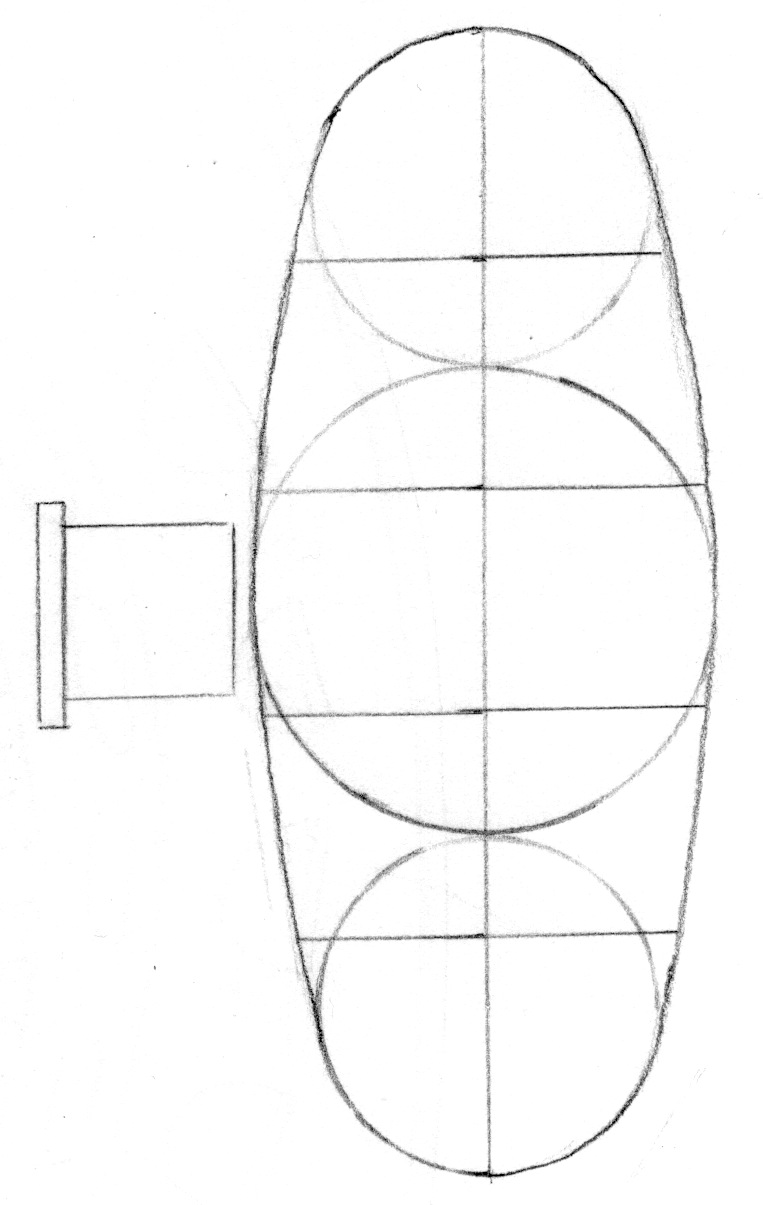
My social network space involved booths all around the world in public places which would be called Public Connect Terminals.  These devices could be programmed in a number of different ways, but the main purpose was to have strangers communicate with each other globally in meaningful ways.
Parti


PCT Models